Professional Microsuction Ear Wax Removal in Surbiton KT6 - Private Clinic Credentials Published
This Content Last Updated: Fri, 7 Aug 2026 04:42
Published Microsuction Care for Surbiton Adults, with Clinic Credentials in Plain View
Choosing private ear wax removal should begin with clear, verified information. For people in Surbiton KT6, the most useful details are the ones that show who provides the treatment, how they assess the ear canal, and what standards guide the appointment. Microsuction is a precise method of earwax removal that uses controlled suction and direct visual examination, which many patients prefer when they want a clean, private and clinically supervised service. Published credentials help you judge whether the provider has relevant training, practical experience and a sensible approach to patient safety. That matters if you have blocked ears, reduced hearing or recurrent wax build-up, because a proper assessment should come before any treatment decision. When a clinic explains its background openly, you can weigh convenience against quality with more confidence. In a private hearing care setting, that transparency is often the best sign that the service is organised, accountable and focused on safe outcomes rather than quick claims.
What Trustworthy Clinic Credentials Should Show
A credible microsuction clinic should explain more than just the treatment name. Look for information about ear examination skills, wax removal training, the professional background of the practitioner and the way consent is handled. It should also be clear that the clinician will inspect the ear before proceeding, because not every blocked ear is suitable for treatment on the day. Some symptoms can point to infection, inflammation, eczema, perforation or another ear condition that needs different care. Openly published details help you understand whether the provider is working within recognised clinical standards and whether the appointment will be handled with care. That is particularly helpful for adults who have had ear surgery, frequent infections or a history of uncomfortable wax impaction. If the service is transparent about assessment and aftercare, it is usually easier to trust that your ear health is being taken seriously, not simply treated as a routine task.
Why Transparency Matters Before You Book
When a clinic publishes its credentials clearly, you are less likely to face uncertainty on the day. You can see whether the service is suitable for your needs, whether the appointment is likely to be straightforward and whether the practitioner understands when to pause or refer on. That gives you a more informed basis for choosing private microsuction in Surbiton.
Small but Useful Sign of Quality
Plain language is often a good indicator. If the clinic explains earwax removal, assessment and aftercare without vague wording, it usually shows confidence in its professional standards.
Why Patients Benefit
Clear published information can make the difference between booking with hesitation and booking with confidence, especially when hearing feels muffled and you want a timely answer.
How a Surbiton Microsuction Appointment Usually Works from First Check to Aftercare
Research Catalogue Results for Ear Wax Removal
- The auricular cough reflex: lateralization, prevalence, procedural determinants, and the role of examiner handedness. - van de Loo J, Mayer M, Sharaf K, Eckel H, Jansen L, Klussmann JP, Luers JC., 2026.
- High-definition otoscopic device for humanitarian mission: how i do it. - Lechien JR, Maniaci A, Kipsang MJ, Kibor M, Vaira LA., 2025.
- Use of Castor Oil in Dermatology: A Narrative Review. - Girdler K, Cabatu A, Olds H, Potts GA., 2026.
Source: Europe PMC. These are bibliographic matches, not personalised medical advice or an endorsement of a treatment.
A well-run microsuction appointment should feel calm, structured and easy to follow. The process normally begins with a discussion of your symptoms, including any blocked sensation, change in hearing, ear pain, tinnitus, discharge or previous infections. This conversation matters because it helps the practitioner understand whether ear wax is the likely cause or whether another issue needs consideration first. The ear is then examined with suitable equipment so the clinician can assess the wax, the canal and the eardrum before deciding whether removal is appropriate. If the wax is suitable, microsuction can often be carried out during the same visit. The technique uses direct visualisation and fine suction, which gives the practitioner close control and helps avoid introducing water into the ear canal. Many people prefer this approach because it feels measured and precise, especially if they have previously found irrigation uncomfortable. In private hearing care, the appointment should also include clear explanation throughout, so you know what is happening and what to expect next.
What Usually Happens During the Visit
Once the initial assessment is complete, treatment can begin if the ear is suitable. The practitioner will use a specialist suction instrument to remove the wax gradually, checking visibility as they work. Some people notice a gentle tickling sensation, a light whistling sound or brief pressure, but the procedure is generally well tolerated. If the wax is soft, removal may be quick. If it is compacted or close to the eardrum, the appointment may take longer and need more careful handling. The aim is not to rush, but to clear the blockage safely and leave the ear canal as comfortable as possible. After the procedure, the clinician should explain what has been done, whether the ear looks settled and whether any follow-up is sensible. That may include advice on keeping the ear dry for a short period, avoiding cotton buds and returning for review if symptoms do not settle. For people in Surbiton KT6, this practical structure is often one of the main reasons private microsuction feels reassuring.
When the Appointment May Pause
If the ear looks inflamed, if there is active discharge or if symptoms suggest a different condition, the practitioner should stop and advise on the next sensible step. Safe ear care means treating the right problem, not simply removing wax at all costs.
Why Microsuction Is Often Chosen Instead of Ear Syringing
Microsuction is frequently preferred because it lets the clinician view the ear canal and eardrum directly while removing wax. That visibility gives the practitioner more control over the procedure, which is one reason many patients and hearing specialists regard it as a careful modern option for ear wax removal. Ear syringing, sometimes called irrigation, still has a role in some settings, but it uses water pressure and is not always suitable for every ear. If you have a history of eardrum perforation, ear surgery, infection or long-term sensitivity, a water-based method may not be the best choice. People often turn to microsuction when they want a cleaner procedure, less mess and a method that can be adapted to the shape and condition of the ear canal. In private hearing care, this precision can be especially valuable when wax sits near the eardrum or is tightly packed. Even so, the right choice should always depend on assessment, not assumption.
- Direct visualisation gives the practitioner a clearer view of wax position and ear canal shape.
- Microsuction avoids introducing water into the ear, which some patients find more comfortable.
- A history of surgery or perforation can make irrigation less suitable than suction-based removal.
- The method can be particularly useful when wax is compacted close to the eardrum.
- Assessment before treatment remains essential, because not every blocked ear is safe to treat the same way.
For many adults in Surbiton, these advantages make microsuction the more practical private option, especially when they want a timely appointment and a straightforward clinical explanation of what is happening.
When Irrigation May Not Be the Right Fit
If you have ear pain, discharge, recent surgery or unexplained hearing loss, water-based earwax removal may not be appropriate. A responsible provider will review those details first and decide whether another approach is safer for your ears.
Helpful Rule Before Treatment
Do not try to soften or dig out wax yourself immediately before the visit, because this can make examination harder and may irritate the canal.
Why That Helps the Clinician
Leaving the ear canal alone gives a clearer view of the wax and may reduce the chance of extra irritation during microsuction.
Signs That Ear Wax Removal May Be Appropriate for You
Earwax is a normal substance, but too much of it can cause frustrating symptoms. Many people notice a blocked feeling, reduced hearing, muffled sound or a sense that their ear is not clearing properly. Others describe itching, popping, mild pressure or sudden changes after using earbuds, hearing aids or earplugs. These signs do not prove that wax is the cause, which is why a proper ear examination matters, but they do show that a review could be sensible. Microsuction ear wax removal is often considered when these symptoms are affecting daily life, work or conversation. A private clinic in Surbiton can offer a practical way to get the ear assessed without a long delay. The point is to match the treatment to the symptoms and the ear itself, rather than treating every blocked sensation in the same way. In some cases, the practitioner may find that another issue is responsible and advise a different clinical route.
- A blocked or full feeling that does not settle after a few days.
- Muffled hearing that makes normal conversation, television or phone calls harder to follow.
- Repeated wax build-up linked to hearing aids, earplugs or regular earbud use.
- Itching or irritation in the ear canal, especially if wax is visible on examination.
- A popping or pressure sensation that seems connected to wax rather than a cold.
- Wax-related discomfort that keeps returning and affects everyday comfort.
If you have pain, discharge, dizziness or a sudden marked change in hearing, it is better to seek medical advice promptly. Those symptoms can point to something more than earwax and should not be ignored.
When to Seek a Review Rather Than Wait It Out
Some mild wax symptoms settle naturally, but ongoing blockage, worsening hearing or repeated discomfort deserves a proper assessment. A clinician can confirm whether microsuction is suitable and whether your symptoms fit earwax build-up.
What to Expect Before, During and After Microsuction Ear Wax Removal
Knowing the appointment flow can make a private microsuction visit feel much easier to manage. Before treatment, the practitioner will usually review your symptoms and inspect the ear canal with suitable equipment. That first step matters because it confirms whether the wax can be removed safely and whether the eardrum is visible enough to proceed. During microsuction, you may hear a soft whistling or suction sound, which is normal. Some people feel a little tickling or brief pressure, but the procedure is generally well tolerated. After treatment, the ear may feel clearer straight away, although hearing can continue to improve over the next short period if the canal was heavily blocked. A private clinic should give simple aftercare advice and explain what to do if symptoms linger. That might include keeping the ear dry for a short time or arranging a review if the canal remains irritated. A thoughtful aftercare conversation is often just as important as the removal itself.
Useful Aftercare Points
After ear wax removal, avoid putting anything into the ear canal and do not try to clean it yourself with buds or other objects. If you have skin sensitivity, ear eczema or a previous infection, mention it during the appointment so the clinician can tailor the advice. It can also help to note any recurring pattern, such as one ear blocking more often than the other, because that may shape future care. In a professional Surbiton microsuction clinic, aftercare should be based on the condition of the ear rather than a generic instruction sheet. That personalised approach reflects good hearing care and helps support long-term ear health. If the wax has been causing muffled hearing for some time, it is common for people to notice the world sounds clearer once the blockage is removed. Even so, if symptoms do not settle or if new discomfort appears, a review is sensible.
When to Ask for Follow-Up Advice
If you still feel blocked, develop pain, notice discharge or experience worse hearing after the appointment, contact a healthcare professional for review rather than assuming the issue will settle on its own. A prompt check can rule out other ear problems.
Simple Post-Visit Tip
Keep a brief note of how your ears feel over the next day or two, because it can help you explain any lingering symptoms clearly if you need further advice.
Why That Is Useful
A short symptom record can make follow-up communication faster and more accurate, especially if you have a complex ear history or recurring wax build-up.
How to Choose a Private Microsuction Clinic with Confidence
Choosing where to book ear wax removal is not only about speed. It is also about trust, clarity and the quality of the clinical process. A good private clinic should explain what microsuction involves, who carries it out, what training supports the service and how patient safety is managed. For many people, that openness is reassuring because ear treatment is personal and can feel unfamiliar if you have never had it before. Published credentials help you check that the service is being delivered by a suitably trained professional rather than relying on generic marketing language. This matters whether you are booking because of blocked ears, recurring wax problems or hearing aid maintenance. A careful patient will often look for signs of experience, regulated practice and clear aftercare as well as convenience. Those markers are usually more useful than a simple promise of fast appointments. A Surbiton clinic that explains its approach well is usually easier to trust.
Questions Worth Asking Before You Book
It can be sensible to ask how the clinic assesses ear suitability, what happens if the ear is not ready for treatment and whether you will receive advice if the wax is too hard or too close to the eardrum for immediate removal. You may also want to know how long the appointment usually takes and whether a second visit could ever be needed. These are practical questions, and a professional provider should welcome them. In private hearing care, transparency is part of the service. You might also ask whether the practitioner has experience with hearing aid users, recurrent wax or more sensitive ear canals, because those details can shape the appointment and the aftercare advice you receive. The aim is not to challenge the clinic, but to make sure the service suits your ear health needs.
What a Good Answer Sounds Like
Look for replies that are specific, calm and focused on clinical suitability. Clear explanations about assessment and aftercare usually matter more than broad claims about being the best or fastest.
Tip for Comparing Providers
Check whether the clinic gives plain explanations of training, ear examination and consent, because those are stronger indicators of quality than promotional language.
Why This Helps
Clear information makes it easier to compare microsuction providers in Surbiton and choose a clinic that feels credible, safe and well organised.
Support for Recurring Wax Build-Up and Hearing Aid Users in Surbiton
Some people only need ear wax removal occasionally, while others experience repeated build-up and ongoing blocked-ear symptoms. Hearing aid users are especially familiar with this pattern, because devices can alter airflow in the ear canal and sometimes contribute to faster wax accumulation. A private microsuction clinic can be useful in these cases because it offers a direct route to assessment and removal without waiting for symptoms to become more troublesome. If wax keeps returning, it can help to discuss your history during the appointment so the clinician can explain what is typical for your ears and what signs should prompt a return visit. The aim is not only to clear the current blockage, but to support better long-term ear care. For many patients, that includes practical advice on hearing hygiene, safe use of ear protection and when to avoid self-treatment. Recurrent wax does not automatically mean something is wrong, but it does deserve proper review and sensible guidance.
Recurring wax is common, especially among hearing aid users and people with narrower ear canals, but repeated blockages still deserve proper assessment rather than repeated guessing.
Because every ear is different, the best approach in Surbiton private practice is one that combines microsuction with a sensible conversation about your symptoms, your hearing history and the safest next step. That is often more helpful than trying to manage repeated blockage alone at home.
What to Mention at Your Appointment
Tell the clinician if you use hearing aids, have a history of recurrent ear infections, or often feel one ear block more than the other. Those details can help shape the assessment and future advice.
Small Habit That Can Help
Keep note of how often symptoms return, because a simple pattern over time can help the clinician judge whether the build-up is typical or unusually frequent.
Why That Matters
A short record of recurring symptoms can support a more tailored ear care plan and may make future appointments quicker to assess.
Accessibility and Practical Access That Help Make the Visit Easier
Accessibility is part of good patient care, not an optional extra. For people attending private ear wax removal, a ground-floor setting and level access can make the visit easier to manage, especially if mobility is limited or if you would rather avoid stairs. Practical details such as straightforward entry, nearby parking and clear arrival instructions can reduce stress before the appointment even starts. When a clinic provides this information openly, it shows respect for different patient needs and helps people plan their visit properly. That is particularly useful for older adults, hearing aid users and anyone attending while dealing with discomfort from a blocked ear. A smooth arrival can make the microsuction appointment easier to focus on, because you are not also worrying about finding the right entrance or managing awkward access points. In private hearing care, these small details often make a real difference to comfort and confidence.
- Good access information should be easy to find before the day of the appointment.
- Ground-floor access can be helpful for clients who prefer or need step-free entry.
- Nearby parking options can reduce the stress of arriving for a timed appointment.
- Clear access routes help people with hearing difficulties feel less rushed on arrival.
- Accessible surroundings support a more relaxed start to the consultation and treatment.
For many patients, the ability to attend a clinic with level access is just as important as the treatment itself, particularly when booking private microsuction in Surbiton KT6. It helps the whole visit feel more manageable from the outset.
Why Arrival Details Matter
When you already feel uncomfortable because of a blocked ear, simple access information can remove an extra layer of uncertainty. That can make the appointment feel calmer and more organised.
Patient-Friendly Practical Point
Allow a little extra time if you are unfamiliar with the area or if you prefer a slower arrival, because feeling rushed can make any healthcare visit more stressful.
How This Supports the Consultation
Arriving without avoidable stress gives you more headspace to discuss symptoms clearly and to follow the practitioner's explanation of the procedure.
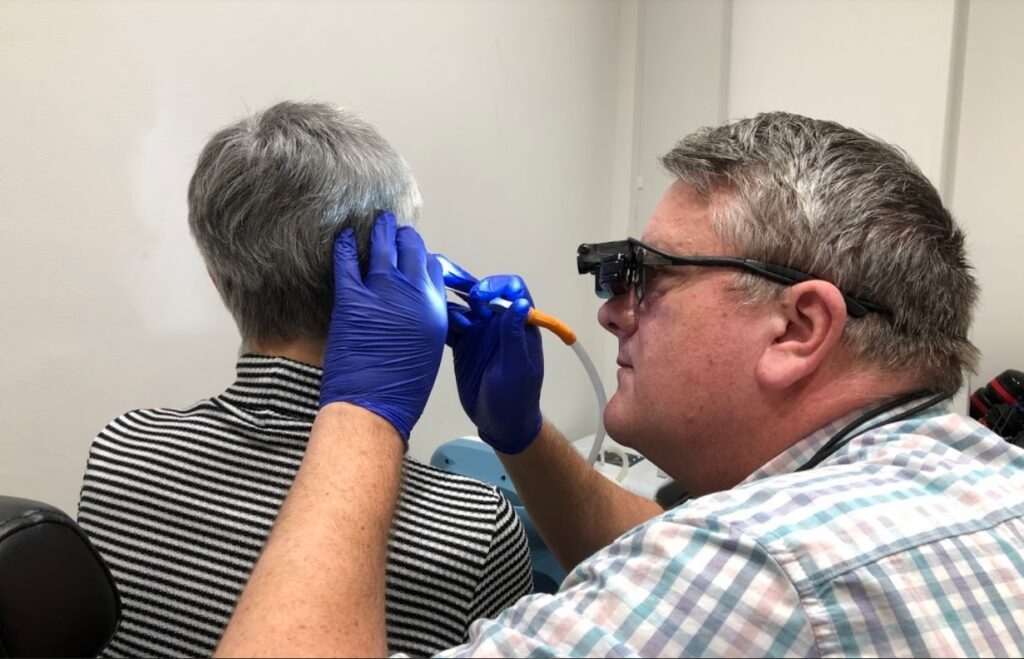
Our Surbiton ear wax removal clinic sits inside Therapy Spaces on St James' Road, a ground-floor setting only a short walk from Surbiton station. There is pay by phone on-street parking just outside, and the clinic is located on the ground floor, which makes arrival a little simpler to plan.
Ear Wax Removal Surbiton South West London Map, Location and Directions
You can get directions to our Microsuction Surbiton Location here. Just put in your location in the specified area and Google Maps should lead you to the clinic.
%%JSLNAPSECTION_1_F73C271C908AD799%%
Probably the best ear wax removal clinic in Surbiton – don’t just take our word for it – here are some reviews from our many happy clients:
Private Microsuction Ear Wax Removal in Surbiton, with Clinic Details Clearly Published
Professional ear wax removal should feel clear, safe and easy to understand from the outset. For people in Surbiton KT6 who are considering private microsuction, the most helpful clinic information is usually the practical kind: who provides the care, what assessment standards are used, and whether the environment supports a calm appointment. Microsuction is a recognised method for removing earwax, using gentle suction under direct visualisation so the practitioner can work with precision in the ear canal. Many adults choose it because they want a private appointment, a structured clinical process and a way to deal with stubborn blockage without the mess often associated with irrigation. Published credentials matter because they help you judge whether the provider has the training, experience and governance you would expect from a private hearing clinic. On this page, the emphasis is on Surbiton ear wax removal, the clinic's professional background and the details that support an informed decision.
What Published Clinic Details Should Tell You
Helpful credentials are more than a logo or a badge. They should point to professional registration, relevant training in ear examination and microsuction, and a clear understanding of when wax removal is suitable and when it is not. A good private clinic should also explain what happens during the appointment, how the ear is checked before treatment, and what aftercare may be suggested if the ear canal is sensitive. For many people, that clarity matters just as much as convenience. It can reduce uncertainty, particularly if you have dealt with earwax problems before, noticed changes in hearing, or had a blocked ear that has not improved over time. A clinic that publishes its credentials openly is also more likely to offer transparent hearing care, consistent standards and a sensible approach to patient safety.
Clear Private Microsuction Information in Surbiton
Choosing private ear wax removal can feel more straightforward when the clinic explains its approach before you book. For people in Surbiton KT6, useful information includes how the ear will be assessed, what microsuction involves and the professional standards behind the appointment. This allows you to make an informed decision rather than relying on assumptions about a blocked ear or reduced hearing.
Microsuction uses controlled suction with direct visualisation of the ear canal, helping the practitioner work carefully around earwax. This approach may appeal to adults seeking a clean, precise alternative to water-based wax removal methods. However, suitability should always be decided after an ear examination, particularly where there is pain, discharge, previous surgery or a history of ear problems.
- Look for a clear explanation of ear assessment before treatment.
- Check that relevant microsuction training and professional background are openly described.
- Ask how the clinic approaches aftercare and ears that are not suitable for removal on the day.
Published clinic details can provide welcome reassurance, especially if wax build-up has affected everyday listening or comfort. A transparent private hearing care service should help you understand the process, ask sensible questions and decide whether a Surbiton microsuction appointment is the right next step for your circumstances.
How a Surbiton Microsuction Appointment Typically Unfolds
A private microsuction appointment is usually designed to be efficient, but it should still feel considered rather than hurried. The practitioner will often begin by asking about symptoms, recent illness, pain, discharge, tinnitus or any history of eardrum perforation, surgery or ear infections. The ear is then examined so the wax can be assessed before treatment begins. If the wax is suitable for removal, microsuction can often be completed in one visit, although the exact result depends on the amount, position and consistency of the earwax. The procedure uses a fine suction probe and good visibility, which many patients prefer because it keeps water out of the ear canal. In a private clinic, that workflow is usually paired with clear explanations, so you know what is happening and why.
- After treatment, it is normal to discuss any remaining irritation, hearing change or follow-up advice.
- The initial check should establish whether your symptoms fit earwax build-up or point towards something else that needs medical attention.
- The practitioner should explain the procedure in plain language before treatment starts, including what you may hear and feel.
- If the ear looks inflamed or if symptoms suggest another cause, the appointment should pause until appropriate clinical guidance is given.
- Microsuction can suit soft or hard wax, but compacted wax may take longer or require more than one approach.
For patients in KT6 and the wider Surrey area, this kind of structured visit tends to feel more controlled and more reassuring than a rushed walk-in arrangement.
The Microsuction Appointment Process
A well-structured microsuction appointment begins with more than the procedure itself. The practitioner should first discuss your symptoms, including any blocked sensation, altered hearing, tinnitus, recent illness, ear pain or discharge. Your ear history is equally important, particularly if you have had infections, a perforated eardrum or previous ear surgery.
An otoscopic examination helps establish whether earwax is present and whether removal appears appropriate. When the ear is suitable, microsuction is performed using a fine suction instrument under clear visual control. The amount, position and texture of the wax can influence how easily it is removed, so the outcome and timing can vary from one ear to another.
- Share relevant symptoms and ear history at the start of the visit.
- Allow the practitioner to inspect the ear canal before agreeing to treatment.
- Listen to the explanation of what the procedure may sound and feel like.
- Discuss any irritation, ongoing symptoms or follow-up guidance afterwards.
A careful appointment process supports patient safety as well as convenience. If examination suggests inflammation or another cause for your symptoms, treatment may need to be paused while you seek appropriate clinical guidance. This measured approach helps distinguish wax blockage from concerns that need a different type of assessment.
Microsuction Compared with Ear Syringing
Many people are moving away from ear syringing because microsuction is generally seen as the more controlled option. Possible side effects of ear syringing or irrigation include ear infection, tinnitus, eardrum perforation and hearing loss. In Southwest London, local GP surgeries increasingly do not offer syringing, and that shift may be linked to funding pressures as well as the risk of pushing wax further against the eardrum. Is it any surprise that more people are choosing microsuction ear wax removal instead of walk-in syringing in London? The rise in demand has also meant that NHS micro suction clinics are often unable to keep up, with waiting times commonly stretching beyond two to three months.
You do not need to wait months for micro suction. If you would rather save time by going private, it may be a more convenient choice than you expect. Simply visit our booking page and you could be moving past wax blockage this week.
Fascinating Facts About Surbiton
- Railway Boomtown
Surbiton’s modern identity began in 1838 when the London and Southampton Railway opened, transforming it from a rural hamlet into a commuter hotspot. Developers marketed Surbiton as “London’s countryside,” attracting Victorian professionals with promises of fresh air and quick train rides to Waterloo. - Art Deco Station Icon
Surbiton Station, redesigned in 1937 by architect J.R. Scott, is a Grade II-listed Art Deco masterpiece. Its sunburst clock and sleek curves made it a symbol of 1930s modernity—locals joke it’s the only train station with its own fan club (#SurbitonStationSundays). - The Lost Surbiton Lagoon
In 1934, Surbiton opened a lavish open-air lido with sand beaches and diving boards, nicknamed “Surbiton-on-Sea.” Closed in 1980, its site is now housing, but older residents still reminisce about summers soundtracked by Big Band tunes and ice-cream vans. - Ear Wax Removal in Surbiton
Ear wax removal is available from the experts at Hearing First Surbiton on Mondays in Therapy Spaces on St James’ Road, just a couple of minutes’ walk from Surbiton station. Click here to book now. - Coronation Clock Tower Mystery
Surbiton’s 1902 Coronation Clock Tower, built for Edward VII, hides a time capsule with a cryptic note from Mayor Frederick Brice. Rumors claim it includes a recipe for “Surbiton Pudding,” but the capsule won’t be opened until 2102. - The Good Life’s Surbiton Connection
The 1970s sitcom *The Good Life*, about suburban self-sufficiency, was set in Surbiton. Though filmed in BBC studios, its fictional “46 Myddleton Drive” inspired real Surbiton residents to grow tomatoes and keep chickens in their gardens. - Punk Poet’s Suburban Hideout
John Cooper Clarke, the “Punk Poet Laureate,” lived in Surbiton during the 1980s. He wrote *“Hire Car”* about renting a Ford Cortina from a local garage, quipping, “Surbiton’s where anarchy goes to retire.” - Seething’s Secret Society
Surbiton’s fictional “Seething” community, created by local writer John Finnemore, hosts absurdist events like the *World Worm Charming Championship*. The annual Seething Festival features invisible art shows and competitions for “Most Average Citizen.” - The Antelope’s Highwayman Past
Surbiton’s 17th-century Antelope pub allegedly hid highwayman Claude Duval, who “politely” robbed stagecoaches on Portsmouth Road. A ghostly figure in a tricorn hat is said to order vanished ale—then leave antique coins on the bar. - Tumble Down Dick Pub’s Royal Slur
This Surbiton pub’s name mocks Richard Cromwell, son of Oliver Cromwell, who briefly ruled England. Nicknamed “Tumbledown Dick” for his weak leadership, his ghost supposedly haunts the beer garden, tripping over imaginary cobblestones. - Surbiton Writers’ Circle
Founded in 1947, this group included sci-fi author J.G. Ballard, who wrote *Crash* while living in Surbiton. Members met at the Victoria pub, where Ballard allegedly scribbled drafts on beer mats—now framed behind the bar. - 1984 UFO Panic
In October 1984, Surbiton residents reported a “triangular craft” hovering near Tolworth Tower. The *Surbiton Times* splashed the story, but the Ministry of Defence later blamed a rogue weather balloon—locals still call it “Surbiton’s Close Encounter.” - Legend of the Surbiton Squirrel
A giant albino squirrel, nicknamed “Snowball,” became a local celebrity in the 1990s. Sightings sparked a 2001 children’s book, *The Surbiton Squirrel Squad*, though skeptics insist it was just a well-fed regular squirrel with dyed fur. - Secret Underground Tunnels
Rumors persist of Victorian smuggling tunnels beneath Surbiton Station, linking to the Thames. Engineers found bricked-up passages in 2003, but the council sealed them—fueling myths of buried gin or pirate treasure. - Surbiton’s Unsolved Murder
In 1873, grocer Albert Cooper was found dead in his Surbiton shop, bludgeoned with a sack of flour. The case went cold, but amateur sleuths still scour *Surbiton Library* archives for clues, hosting true-crime walks every Halloween. - Pumpkin Parade Cult Classic
Every October, Surbiton’s St Andrew’s Square hosts a pumpkin parade where locals carve 500+ jack-o’-lanterns. The 2016 event went viral when a pumpkin resembling Boris Johnson won “Most Politically Charged Gourd.” - Surbiton Film Festival’s Humble Roots
Launched in 2006 at the local Odeon, this festival screens indie films judged by Surbiton residents. The “Golden Cabbage Award” trophy nods to the area’s historic market gardens—and 2023’s winner was a rom-com about compost. - Surbiton Racket & Fitness Club
Founded in 1881, it’s one of England’s oldest tennis clubs. A 1923 match here inspired Agatha Christie’s *The Murder of Roger Ackroyd*—though members insist “no real murders occurred, just terrible backhands.” - St Mark’s Church Spire Collapse
In 1955, Surbiton’s St Mark’s Church spire crashed into the nave during a storm. Rebuilt in 1960, the new spire has a lightning rod locals call “God’s USB port.” The original weathervane, bent in the fall, sits in the vestry. - The Surbiton Mermaid Myth
A 19th-century hoax claimed a “Surbiton Mermaid” was caught in the Thames. The “creature”—a monkey torso stitched to a fish—was displayed at the Lamb pub until 1891. A bronze mermaid statue now winks from a fountain in Claremont Gardens.
Why Microsuction Is Often Preferred Over Ear Syringing
Microsuction is widely chosen because the clinician can see the ear canal and eardrum directly while removing wax. That visibility is one reason many patients and hearing specialists view it as a modern approach to earwax removal. Ear syringing, or irrigation, still has a place in some settings, but it uses water pressure and is not always suitable, especially where there is a history of ear surgery, infection, perforation or long-term sensitivity. People often seek microsuction when they want a cleaner, more controlled procedure with fewer variables during treatment. In private hearing care, the method is also valued for its precision, particularly when wax sits near the eardrum or is tightly packed in the canal. The best choice still depends on the individual ear, so a proper pre-treatment assessment remains essential.
When Irrigation May Not Be Suitable
If you have ear pain, active discharge, a perforated eardrum, recent ear surgery or unexplained hearing loss, irrigation may not be appropriate and a clinical review is needed first. A responsible provider will not simply treat wax without thinking about the wider ear health picture. That is one reason published credentials and a careful appointment process matter in Surbiton private practice. They show that the clinic is considering ear safety, not only convenience. Patients who often experience wax build-up may also want to ask what the practitioner recommends for future maintenance, especially if they are prone to blocked ears or wear hearing aids.
Practical Tip Before You Attend
Do not put cotton buds, hair grips or other objects into the ear canal before your appointment, because this can push wax deeper and make removal harder.
Why This Matters in Clinic
Leaving the ear canal undisturbed helps the practitioner assess the wax accurately and may reduce the risk of extra irritation during microsuction.
More Information
You can find further details about our Surbiton ear wax removal clinic here.
Professional Standards, Training and Patient Safety in Private Ear Care
People booking private ear wax removal often want reassurance that the service is delivered by someone with suitable clinical training. That is sensible. Ear health calls for more than a quick look, because a blocked ear may be caused by wax, but it can also be linked to infection, fluid, eczema, foreign bodies or other conditions that need different management. A well-run microsuction clinic should therefore combine technical skill with sound judgement. Published credentials help patients compare providers and understand whether the clinician works within recognised professional standards. In the UK, that may include evidence of regulated practice, ongoing training and familiarity with otoscopy, hearing care and earwax removal protocols. It also helps if the clinic explains how consent is obtained, how equipment is maintained and what happens if the ear is not suitable for treatment on the day. These details build trust and show that the clinic takes patient safety seriously.
| Credential Area | Why It Matters For Patients |
|---|---|
| Clinical training in microsuction | Helps ensure the practitioner understands safe wax removal techniques and ear anatomy. |
| Ear examination and assessment | Supports better decisions about whether wax removal is suitable for the individual ear. |
| Transparent governance | Gives patients a clearer view of how the private clinic manages quality and accountability. |
| Aftercare advice | Explains what to expect after treatment and when to seek further help if symptoms persist. |
When these professional details are published clearly, people in Surbiton can make a more confident choice about where to book their earwax removal appointment.
Private Ear Care Standards and Patient Safety
Professional ear care requires clinical judgement as well as technical ability. Although earwax is a common explanation for a blocked ear, similar symptoms may also be associated with infection, fluid, eczema, a foreign body or another ear condition. A responsible microsuction service should assess the ear properly instead of assuming that wax removal is always the answer.
When considering a private clinic, published information about training, regulated practice, otoscopy and earwax removal protocols can help you understand the provider's professional basis. Clear communication around consent, equipment maintenance and treatment suitability also demonstrates a considered approach to hearing care and patient safety.
- Microsuction training supports safe understanding of ear anatomy and removal techniques.
- Pre-treatment examination helps determine whether removal is suitable for the individual ear.
- Transparent governance gives patients a clearer view of clinical quality and accountability.
- Aftercare advice explains what to monitor and when further help may be needed.
These details are particularly valuable if you have recurring wax, sensitive ears or uncertain symptoms. Before booking in Surbiton, take time to review the clinic information and raise any concerns directly. Informed questions can help ensure that the appointment is appropriate for your needs and that you know what will happen if treatment cannot proceed.
Nearby Clinics
Here are some of our nearby clinics:
Signs That Ear Wax Removal May Be Appropriate
Not every blocked ear is caused by wax, but there are common signs that make ear wax removal worth considering. Many people notice reduced hearing, a feeling of fullness, muffled sound or sudden changes after showering or using hearing aids. Some also describe popping, itching or the sense that the ear is not clearing properly. If symptoms are mild, they may settle on their own, but ongoing discomfort can be frustrating and disruptive. Microsuction ear wax removal is often chosen when the blockage is affecting daily listening, work or family conversations. A private clinic in Surbiton can be a practical option if you want a timely appointment and a professional assessment before treatment. The key point is that wax removal should be based on symptoms and examination, not guesswork.
- A blocked or full feeling in one or both ears that does not clear after a few days.
- Muffled hearing that makes speech sound distant, especially in noisy places.
- Wax-related problems after using hearing aids, earbuds or earplugs regularly.
- Difficulty hearing the television, phone calls or conversation in normal settings.
- Itching or irritation inside the ear canal, particularly if wax is visible on examination.
- A sensation of pressure or popping that seems linked to wax build-up rather than a cold.
If you have pain, discharge, dizziness or a sudden marked change in hearing, it is better to seek medical advice promptly rather than assume the issue is wax alone.
When Earwax Removal May Be Worth Considering
Earwax can cause a noticeable sense of fullness, muffled sound or difficulty following conversation, but these symptoms do not confirm the cause on their own. A professional examination is important because blocked-ear sensations may arise for reasons other than wax. This is why microsuction should be based on assessment rather than self-diagnosis.
People often consider ear wax removal when their hearing feels reduced in normal settings, when sounds seem distant or after wax-related difficulties with hearing aids, earbuds or earplugs. Ongoing irritation, itching or popping may also prompt a review. If the symptoms are affecting work, family conversations or daily comfort, a private assessment can offer a practical route to clarification.
- Notice whether the blocked feeling persists rather than clearing after a few days.
- Consider whether muffled hearing is interfering with calls, television or conversation.
- Explain any regular use of hearing aids or in-ear devices at your appointment.
- Seek prompt medical advice for pain, discharge, dizziness or a sudden marked hearing change.
Do not insert cotton buds or other objects into the ear canal in an attempt to remove wax, as this can push it further in. A clinician can assess whether microsuction is appropriate and provide guidance that reflects the condition of your ear, rather than relying on a one-size-fits-all solution.
Book Your Microsuction Ear Wax Removal Appointment Today, And Say Goodbye to Ear Wax Discomfort.
Our microsuction ear wax removal clinic in Surbiton also serves clients in East Finchley, Church End, Golders Green, Hendon, Hampstead Garden Suburb, Mill Hill, Barnet, Finchley, Highgate, Crouch End, Hornsey, Harringay, Southgate, Whetstone, Arnos Grove, Osidge, Wood Green and Tottenham.
Book Ear Wax Removal in Surbiton
If earwax build-up is causing discomfort or a sense of blockage, the Surbiton microsuction clinic offers a private appointment option. The page identifies the clinic as serving people from Surbiton and a broad range of surrounding London neighbourhoods, including Finchley, Barnet, Highgate, Wood Green and Tottenham. Use the booking link to request an appointment and take the next step towards having your ear concerns assessed.
- Online booking provides a direct way to begin arranging a visit.
- Private microsuction ear wax removal is available by appointment.
- The Surbiton location is presented as an option for clients travelling from several nearby areas.
A blocked ear can be disruptive when it affects comfort or everyday listening. Although earwax is common, the right next step depends on your symptoms and ear history. If you are unsure whether wax is the cause, or if symptoms are severe or unusual, ask a suitably qualified healthcare professional for guidance. For suitable clients, booking a private ear wax removal consultation offers a practical way to explore treatment at the Surbiton clinic.
What to Expect Before, During and After Microsuction
Knowing the appointment flow can help you arrive calm and prepared. Before treatment, the practitioner will usually review your symptoms and inspect the ear canal with suitable equipment. That step matters because it confirms whether the wax can be removed safely and whether the eardrum is visible enough to proceed. During microsuction, you may hear a soft whistling or suction sound, which is normal. Some people feel a little tickling or brief pressure, but the procedure is generally well tolerated. After treatment, the ear may feel clearer straight away, although hearing can continue to improve over the next short period if the canal was heavily blocked. A private clinic should give you simple aftercare advice and explain what to do if symptoms linger. That might include guidance on keeping the ear dry for a short time or arranging a review if the canal remains irritated.
Useful Aftercare Points
After ear wax removal, avoid putting anything into the ear canal and do not try to clean it yourself. If you have skin sensitivity, ear eczema or a previous infection, mention it at the appointment so the clinician can tailor the advice. It can also help to note any recurring pattern, such as one ear blocking more often than the other, because that may shape future care. In a professional Surbiton microsuction clinic, aftercare should be based on the condition of the ear rather than a generic instruction sheet. That personalised approach reflects good hearing care and helps protect long-term ear health.
When to Ask for Follow-Up Advice
If you still feel blocked, develop pain, notice discharge or experience worse hearing after the appointment, contact a healthcare professional for review rather than assuming the issue will settle on its own.
Preparing for Microsuction and Aftercare
Understanding the likely appointment flow can make private microsuction feel less daunting. Before treatment, the practitioner usually reviews your symptoms and examines the ear canal to check whether wax removal can be undertaken safely. This preliminary assessment is central to good ear care, as it helps identify concerns that may require a different clinical route.
During microsuction, a soft suction or whistling noise may be audible. Some people notice tickling or brief pressure, while others find the procedure straightforward. If the ear canal has been heavily blocked, the sensation of clearer hearing may be immediate or may settle over a short period as the ear adjusts following removal.
- Tell the practitioner about ear eczema, skin sensitivity or previous infections.
- Avoid placing buds, drops or objects in the ear unless you have been advised to do so.
- Make a note of whether one ear becomes blocked more frequently than the other.
- Follow any individual aftercare guidance given following your assessment.
Contact a healthcare professional for review if you remain blocked, develop pain or discharge, or notice worsening hearing after the appointment. Individual aftercare should reflect what the practitioner sees in the ear on the day. This personal guidance can support comfortable recovery and help you make informed decisions about future earwax management.
Appointment Booking
Due to high demand, private ear wax removal is by appointment only. You can book an ear microsuction appointment here, or click on the button below:
Plan Your Surbiton Microsuction Appointment
Private ear wax removal at the Surbiton clinic is arranged by appointment, reflecting the demand for this service. Booking ahead gives you a clear route to request a suitable visit for microsuction ear wax removal, rather than depending on a walk-in arrangement. Use the dedicated online booking link to start the process and review the information presented before confirming your appointment.
- Open the Surbiton appointment booking page.
- Choose the appointment details requested through the booking journey.
- Check the confirmation carefully and keep it for your records.
- Contact the clinic directly if you need to clarify any aspect of your visit.
When arranging an earwax removal appointment, it can be useful to mention any practical requirements or concerns that may affect your visit. If you have ear pain, discharge, dizziness, a suspected ear infection or sudden changes in hearing, seek appropriate clinical advice and confirm whether microsuction is suitable before going ahead. Booking in advance is a straightforward first step towards addressing a troublesome blocked-ear sensation.
Accessibility and Practical Access at the Clinic
Accessibility is part of good patient care, not an optional extra. For people attending private ear wax removal, a ground-floor setting and level access can make the visit easier to manage, especially if mobility is limited or if you would rather avoid stairs. Practical details such as straightforward entry, comfortable waiting arrangements and nearby parking can reduce stress before the appointment even starts. When a clinic provides clear access information, it shows respect for different patient needs and helps people plan their visit properly. That is particularly useful for older adults, hearing aid users and anyone attending while dealing with discomfort from a blocked ear. A smooth arrival can make the microsuction appointment easier to focus on, because you are not also worrying about finding the right entrance or managing awkward access points. In private hearing care, these small details often make a real difference.
- Good access information should be easy to find before the day of the appointment.
- Ground-floor access can be helpful for clients who prefer or need step-free entry.
- Nearby parking options can make it easier to attend an appointment without a long walk.
- Clear access routes help reduce anxiety for people arriving with hearing difficulties or ear discomfort.
- Accessible surroundings support a more relaxed start to the consultation and treatment.
For many patients, the ability to attend a clinic with level access is just as important as the treatment itself, particularly when booking private microsuction in Surbiton KT6.
Disabled Access
The clinic is on the ground floor and there is level access.
Driving Directions to Hearing First Surbiton
- Earwax.org.uk Surbiton to Hearing First Surbiton: approximately 0.1 miles and 1 minute by car. The route typically begins: Head south-east on Claremont Rd/B3363; then At the roundabout, take the 3rd exit onto St James' Rd Destination will be on the right. Open this route in Google Maps.
- Red Lion Road Surgery to Hearing First Surbiton: approximately 1.4 miles and 7 minutes by car. The route typically begins: Head north-east on Red Lion Rd towards Ewell Rd/A240; then Turn left onto Ewell Rd/A240; then Slight left onto Kingsdowne Rd/A3210. Open this route in Google Maps.
- Claremont Gardens to Hearing First Surbiton: approximately 0.2 miles and 1 minute by car. The route typically begins: Head south on Claremont Rd/B3363 towards The Crescent; then At the roundabout, take the 3rd exit onto St James' Rd Destination will be on the right. Open this route in Google Maps.
- Fishponds Park to Hearing First Surbiton: approximately 1.2 miles and 6 minutes by car. The route typically begins: Head north-east on Hollyfield Rd towards King Charles Rd.; then Turn left onto King Charles Rd.; then Turn left onto Lamberts Rd. Open this route in Google Maps.
Distances, indicative journey times and route links are provided by Google Maps. Check live conditions before travelling.
Parking Options for Patients Travelling to the Surbiton Clinic
Car Parks Near Hearing First Surbiton
- YourParkingSpace, approximately 0.8 miles from Hearing First Surbiton. View on Google Maps.
- YourParkingSpace, approximately 0.7 miles from Hearing First Surbiton. View on Google Maps.
- Kingston School of Art, approximately 0.8 miles from Hearing First Surbiton. View on Google Maps.
Parking information and place links are provided by Google Maps. Check restrictions and charges locally.
Parking is often a major factor when choosing a private clinic for ear wax removal. If you are travelling by car, it helps to know whether there is an off-street car park nearby, whether bays are metered, and whether payment is handled by phone. These practical details can cut down delays and make the visit feel more organised, particularly if you are attending at short notice or on a busy weekday. For many people, a private microsuction appointment is already part of a tightly planned day, so convenient parking matters. It is also useful for anyone who may feel less comfortable driving with reduced hearing caused by wax build-up. Planning ahead means you can focus on the appointment itself rather than hunting for a space at the last minute. When parking information is clear, patients can compare the clinic with other hearing care options more confidently.
- Check whether the nearest car park is off-street and how long it usually takes to walk to the clinic.
- Look at whether on-street spaces are pay by phone, metered or limited to specific times.
- Allow extra time if you think parking may be busy when you arrive for your microsuction appointment.
- Keep payment details ready if the area uses digital parking systems or parking meters.
- Consider whether someone can drop you off if your hearing feels especially blocked or distracting.
- If you are unfamiliar with the area, plan your route before you travel so the visit feels less rushed.
These small preparations can make a private ear wax removal visit in Surbiton feel more straightforward and less stressful.
Parking
There is an off-street pay and display car park about 2 minutes' walk away, and there is also on-street pay by phone or metered parking in designated bays outside the clinic.
Choosing a Private Clinic with Confidence
Choosing where to book ear wax removal is not only about speed. It is also about trust, clarity and the quality of the clinical process. A good private clinic should explain what microsuction involves, who carries it out, what training supports the service and how patient safety is managed. For many people, that openness is reassuring because ear treatment is personal and can feel unfamiliar if you have never had it before. Published credentials help you check that the service is being delivered by a suitably trained professional, rather than relying on generic marketing language. This matters whether you are booking because of blocked ears, recurring wax problems or hearing aid maintenance. A careful patient will often look for signs of experience, regulated practice and clear aftercare as well as convenience. Those markers are usually more useful than a simple promise of fast appointments.
Questions Worth Asking Before You Book
It can be sensible to ask how the clinic assesses ear suitability, what happens if the ear is not ready for treatment and whether you will receive advice if the wax is too hard or too close to the eardrum for immediate removal. You may also want to know how long the appointment usually takes and whether a second visit could ever be needed. These are practical questions, and a professional provider should welcome them. In private hearing care, transparency is part of the service.
Tip for Comparing Providers
Look for plain explanations of training, assessment and aftercare, because those are stronger indicators of quality than vague claims about being the best.
Why That Helps
Clear information makes it easier to compare microsuction providers in Surbiton and choose a clinic that feels credible, safe and well organised.
How to Choose a Private Microsuction Clinic
Speed can be helpful when earwax is disrupting daily life, but it should not be the only factor when choosing a private clinic. A credible provider should set out what microsuction involves, how ear suitability is assessed and how patient safety is managed. These practical details give you a stronger basis for comparison than broad marketing claims alone.
Published information about the practitioner's training, relevant experience and clinical process can make a service feel more transparent. It is also useful to know what happens when wax is too hard, sits close to the eardrum or cannot be removed during the initial visit. A professional clinic should be ready to discuss these possibilities clearly.
- Ask how the ear is examined before microsuction begins.
- Check what advice is available if treatment is not suitable on the day.
- Find out whether aftercare and guidance on persistent symptoms are provided.
- Confirm practical appointment details before travelling to the clinic.
Taking a few moments to ask these questions can help you choose a Surbiton ear care provider with confidence. Transparent answers demonstrate respect for informed choice and can help you feel prepared before your appointment. If you have complex symptoms or a significant ear history, mention this when seeking guidance about whether microsuction may be appropriate.
Disabled Parking
Disabled clients with a blue badge can park on double yellow lines for up to 3 hours.
Support for Recurring Wax Build-Up and Hearing Aid Users
Some people only need ear wax removal occasionally, while others experience repeated build-up and ongoing blocked-ear symptoms. Hearing aid users are especially familiar with this pattern, because devices can alter airflow in the ear canal and sometimes contribute to faster wax accumulation. A private microsuction clinic can be useful in these cases because it offers a direct route to assessment and removal without waiting for symptoms to become more troublesome. If wax keeps returning, it can help to discuss your history during the appointment so the clinician can explain what is typical for your ears and what signs should prompt a return visit. The aim is not just to clear the current blockage, but to support better long-term ear care. For many patients, that includes practical advice on hearing hygiene, safe use of ear protection and when to avoid self-treatment.
Recurring wax is common, especially among hearing aid users and people with narrow ear canals, but repeated blockages still deserve proper assessment rather than repeated guessing.
Because every ear is different, the best approach in Surbiton private practice is one that combines microsuction with a sensible conversation about your symptoms, your hearing history and the safest next step.
Video: What Happens in Your Ear Wax Removal Surbiton Appointment
Why Published Credentials Matter for Trust and Informed Choice
When a private clinic publishes its credentials, it gives patients something concrete to assess. That might include the practitioner's professional background, relevant clinical training, experience with ear examination, and the standards used to deliver microsuction. For a service that involves working close to the eardrum, that visibility matters. It helps people see that the clinic is operating within a proper clinical framework, not just offering a beauty-style procedure. In the context of Surbiton ear wax removal, published credentials also help answer the question many patients ask first, namely whether the treatment will be delivered by someone who knows when to treat, when to pause and when to refer on. That judgement is part of good healthcare. It is especially relevant if you have complex symptoms, a history of ear surgery or recurrent infection. The more openly a clinic explains its professional basis, the easier it becomes to choose with confidence.
| What Patients Can Check | Why It Is Useful |
|---|---|
| Training in microsuction and otoscopy | Shows the practitioner understands the procedure and the anatomy involved. |
| Clear explanation of appointment steps | Helps you know what to expect before you arrive. |
| Assessment of suitability | Confirms that the clinic is looking at the whole ear, not just the wax. |
| Aftercare and follow-up advice | Supports safer recovery and helps you know when to seek further help. |
Patients in KT6 often want a private clinic that feels competent, transparent and properly focused on ear health, and published credentials are one of the clearest signs of that.
Hearing First Surbiton
Located within Therapy Spaces,
URL: https://www.hearingfirst.co.uk/book-ear-wax-removal-near-me/book-microsuction-ear-wax-removal-surbiton/
Credentials That Support Informed Ear Care Choices
Published credentials give patients meaningful information to consider before arranging private ear wax removal. For microsuction, it is useful to understand the practitioner's professional background, training in otoscopy and experience of assessing ear canals. These factors matter because the procedure takes place close to the eardrum and should be guided by clinical judgement, not simply by the presence of wax.
Clear appointment information can also show whether a clinic considers the wider ear health picture. A careful assessment helps establish when treatment can go ahead, when it should be postponed and when symptoms may need further medical attention. This is particularly relevant for people with previous ear surgery, recurrent infections or persistent hearing changes.
- Relevant microsuction and otoscopy training supports informed assessment and treatment.
- A clear description of appointment stages helps patients arrive knowing what to expect.
- Suitability checks show that the ear is being considered as a whole.
- Aftercare guidance can help patients recognise when to seek further advice.
For patients in KT6, transparency supports confidence without replacing individual clinical assessment. Review the available information, discuss any important ear history and ask questions before booking. Choosing a clinic that explains its standards in plain language can make the route to microsuction ear wax removal feel more reassuring, organised and focused on safe hearing care.
Book Private Ear Wax Removal in Surbiton When You Want Timely Assessment
If earwax is making hearing feel blocked, muffled or uncomfortable, a private microsuction appointment can offer a direct way to have the ear assessed and treated. The advantage of booking privately is often speed combined with clearer communication, which many people find helpful when they do not want to wait for symptoms to settle on their own. For Surbiton KT6 patients, the clinic information on this page is designed to help you understand the service before you commit. That includes the professional background behind the treatment, the practical setting and the kind of appointment structure you can expect. If the symptoms are mild, you may simply want reassurance. If they are affecting speech, work or daily comfort, a clinical review may be more pressing. Either way, the right step is to choose a provider that explains microsuction clearly and checks whether the ear is suitable before treatment begins. That is the balance you should look for in private ear care.
- Review the clinic information so you know what the appointment involves.
- Check the practitioner details and published credentials before booking.
- Consider your ear history, especially if you have had surgery or infections.
- Book ahead if you want a timely private appointment rather than waiting.
- Seek medical advice first if you have pain, discharge, dizziness or a sudden hearing change.
Once you are ready, a booked appointment can be a practical step towards resolving wax blockage in a calm and organised way.
How to Prepare Once You Have Booked
Keep your notes about symptoms handy, avoid putting anything in the ear canal and allow enough time to attend without rushing. A little preparation often makes the visit smoother and the discussion with the clinician more useful.
Useful Final Reminder
If your symptoms are unusual or severe, do not wait for a wax appointment alone. Get appropriate clinical advice so the correct issue is addressed.
Simple Booking Tip
Choose a time when you can travel comfortably, because arriving relaxed makes it easier to focus on the assessment and any aftercare guidance.
Why This Helps
A calm appointment start usually leads to a better experience, particularly when you are already dealing with muffled hearing or a blocked sensation.
Nearby Bus Stops and Public Transport
Nearest Bus Stops to Hearing First Surbiton
- Claremont Rd/ Surbiton Station (Stop NC), approximately 0.0 miles from Hearing First Surbiton. View this bus stop on Google Maps. Walking directions from Claremont Rd/ Surbiton Station (Stop NC) to Hearing First Surbiton.
- Surbiton Station/Claremont Road (Stop NK), approximately 0.0 miles from Hearing First Surbiton. View this bus stop on Google Maps. Walking directions from Surbiton Station/Claremont Road (Stop NK) to Hearing First Surbiton.
- Surbiton Station (Stop NB), approximately 0.0 miles from Hearing First Surbiton. View this bus stop on Google Maps. Walking directions from Surbiton Station (Stop NB) to Hearing First Surbiton.
- Surbiton (Stop NN), approximately 0.1 miles from Hearing First Surbiton. View this bus stop on Google Maps. Walking directions from Surbiton (Stop NN) to Hearing First Surbiton.
- Victoria Road / Surbiton Station (Stop NP), approximately 0.1 miles from Hearing First Surbiton. View this bus stop on Google Maps. Walking directions from Victoria Road / Surbiton Station (Stop NP) to Hearing First Surbiton.
- Surbiton, approximately 0.1 miles from Hearing First Surbiton. View this bus stop on Google Maps. Walking directions from Surbiton to Hearing First Surbiton.
Nearest Rail, Tube and Tram Stations to Hearing First Surbiton
- Berrylands, approximately 1.1 miles from Hearing First Surbiton. View this station on Google Maps. Walking directions from Berrylands to Hearing First Surbiton.
- Kingston, approximately 1.3 miles from Hearing First Surbiton. View this station on Google Maps. Walking directions from Kingston to Hearing First Surbiton.
- Hampton Wick, approximately 1.5 miles from Hearing First Surbiton. View this station on Google Maps. Walking directions from Hampton Wick to Hearing First Surbiton.
Stops and stations are ordered by straight-line distance from the destination using Google Places coordinates. Place and walking-direction links are provided by Google Maps.