Reading Area Guide: Hearing First Microsuction Ear Wax Removal: How It Works
This Article Refreshed | 29/08/2026 18:06

Waxfree Guarantee™: The only ear wax removal clinic in Reading offering the Waxfree Guarantee™.
We are the only specialist microsuction ear wax removal clinic in Reading offering Microsuction Earwax Removal and Manual Instrument Earwax Removal from expert Audiologists. Every earwax removal practitioner is carefully selected by our founder, Jason Levy. In Reading, we are proud to be known as the ear wax removal experts.
Our convenient Reading location also serves Abbey, Balmore Park, Battle, Calcot, Caversham, Caversham Heights, Caversham Park Village, Cemetery Junction, Central Reading, Church, Coley, Coley Park, Dee Park, East Reading, Emmer Green, Green Park Village, Katesgrove, Kentwood, Kennet Island, Kings Road, Newtown, Norcot, Palmer Park, Park, Reading West, Redlands, Shinfield Rise, Southcote, Thames, The Mount, The Oracle Quarter, Tilehurst, University Area, West Reading, Whitley, Whitley Wood, Beech Hill, Burghfield Common, Burghfield Village, Grazeley, Mortimer Common, Shinfield (village), Spencers Wood, Swallowfield, Theale, Mapledurham, Woodley, Earley, Sonning, Sonning Common, Tilehurst Hill, Wokingham Without, Arborfield, Aldermaston, Arborfield Green, Shinfield Park Village, Arborfield, Barkham, Bray, Bucklebury, Charvil, Finchampstead, Goring, Goring & Streatley, Hurst, Ruscombe, Sindlesham, Streatley, Twyford, Wargrave, Waltham St Lawrence, Winnersh, Sonning Common, Woodley, Winkfield Row and Yattendon.
How Microsuction Removes Wax in Reading
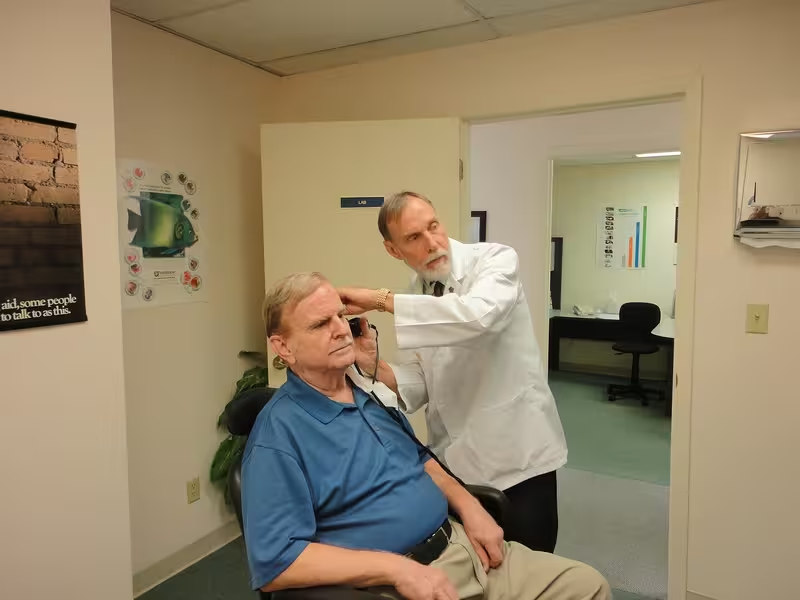
Microsuction ear wax removal is a dry and carefully controlled method for clearing excess wax from the ear canal. In a Reading clinic, an Audiologist uses a microscope or another high-magnification viewing system to obtain a clear view of the ear, then gently removes wax with a fine suction device. Many people choose it because it offers a precise alternative to syringing, particularly when wax is hard, compacted, or close to the eardrum. As the clinician can see the ear throughout the appointment, the technique supports accurate treatment and a thorough check before, during, and after the removal.
At Hearing First, the appointment is designed to feel calm and straightforward. You can usually expect a short discussion about your symptoms, an examination of the ear, and then wax removal if microsuction is suitable. It can also suit patients who wear hearing aids, experience repeated wax build-up, or prefer a method that does not involve water. If the Audiologist notices anything that suggests the issue is more complex than wax alone, they should explain the next sensible step and advise whether further clinical care is needed.
What Usually Happens at the Appointment
The visit typically begins with a conversation about your symptoms, because blocked hearing, a feeling of fullness, tinnitus, and popping noises can all have different causes. A trained Audiologist can then check whether wax is present and decide whether microsuction is the right option for your ear health needs. If it is suitable, the removal is carried out with steady control, and many people find it quicker and less messy than they expected.
A Clear, Clinician-Led Microsuction Process
Microsuction is a dry ear wax removal technique that gives the Audiologist a close, illuminated view of the ear canal while treatment is being carried out. This direct visibility helps the clinician assess the blockage carefully and work with precision, rather than treating the ear without being able to see where the wax is located.
Your consultation can begin with a discussion of symptoms and relevant ear history, followed by an ear examination. If excess wax is confirmed and microsuction is appropriate, the Audiologist can explain the process before starting, helping you understand what you may hear or feel during the appointment.
- Blocked hearing, pressure and tinnitus can have causes other than wax, so examination comes first.
- Microsuction does not use water, which may appeal to people who prefer an alternative to ear irrigation.
- Patients who use hearing aids or experience recurring wax can ask for practical ear health guidance.
If the examination indicates that routine wax removal is not the right next step, it is sensible to follow the clinician's advice on further assessment. Booking a professional ear check in Reading can provide clarity when ear symptoms are affecting comfort, communication or confidence in day-to-day hearing.
Why an Audiologist Is the Right Choice
Choosing an Audiologist matters because ear wax removal is more than a simple cleaning task. The ear canal is narrow, sensitive, and close to structures that influence hearing and balance. A qualified Audiologist understands ear anatomy, common ear conditions, and how to manage excess wax without causing unnecessary irritation. That expertise is especially valuable when wax is impacted, when the canal is delicate, or when the person has a history of ear problems. In a professional clinic, the focus should be on safe ear care, clear explanations, and a treatment plan that suits the individual rather than a one-size-fits-all approach.
For many people in Reading, this specialist-led approach is reassuring. It means the clinician can identify when microsuction is suitable, when manual instrument removal may be more appropriate, and when an appointment should be postponed because the symptoms do not fit routine wax build-up. It also gives patients a chance to ask practical questions about hearing loss, ear health, or the effect of wax on hearing aids. Good care should feel attentive, evidence-based, and honest, which is why professional judgement sits at the heart of the service.
Comfort and Safety During Treatment
Comfort begins with clear communication and a measured pace. The Audiologist should explain what they are seeing, what they are doing, and what sensations you may notice during the procedure. This can be especially helpful for anxious patients, older adults, and anyone who has had an unpleasant experience with ear irrigation in the past. A careful clinician will also monitor for sensitivity and stop if the ear needs a different approach.
When Another Method May Be Better
Sometimes manual instrument ear wax removal is the more suitable choice, particularly if the wax sits in a position where suction is not ideal. The decision depends on clinical judgement, the shape of the ear canal, and the texture of the wax. The aim remains the same, to remove the blockage safely and protect ear health.
Our Ear Care Services Include:
- Impartial Hearing Aid Advice: If you would like friendly, impartial guidance, we are an independent company that is not part-owned by a hearing aid manufacturer, so we can advise you on the model most suited to your lifestyle. We provide the latest digital invisible, rechargeable, bluetooth and iPhone-compatible hearing aids.
- Hearing Tests: We can test your hearing and explain what your results mean, without the sales pressure you may find at some High Street chains.
- Microsuction Ear Wax Removal
- Under 18 Microsuction Ear Wax Removal: We provide microsuction ear wax removal for ages 12 to 17 when accompanied by a parent or guardian.
- Manual Instrument Ear Wax Removal
Hearing First Reading – Microsuction Ear Wax Removal in Reading
Email: [email protected]
URL: https://www.hearingfirst.co.uk/book-ear-wax-removal-near-me/book-microsuction-ear-wax-removal-reading/
Professional ear wax removal Reading with free on-site disabled parking and Audiologists. Conveniently located in Willow House Surgery, on the corner of Willow Road and Orchard Way, with free on-street parking for up to 1 hour. We are the only ear wax removal clinic in Reading to offer The Hearing First Waxfree Guarantee™, so if you have a blocked ear, visit our ear wax removal Reading clinic. We really are the ear wax removal experts in Reading.
Early Signs Your Ears May Need Help
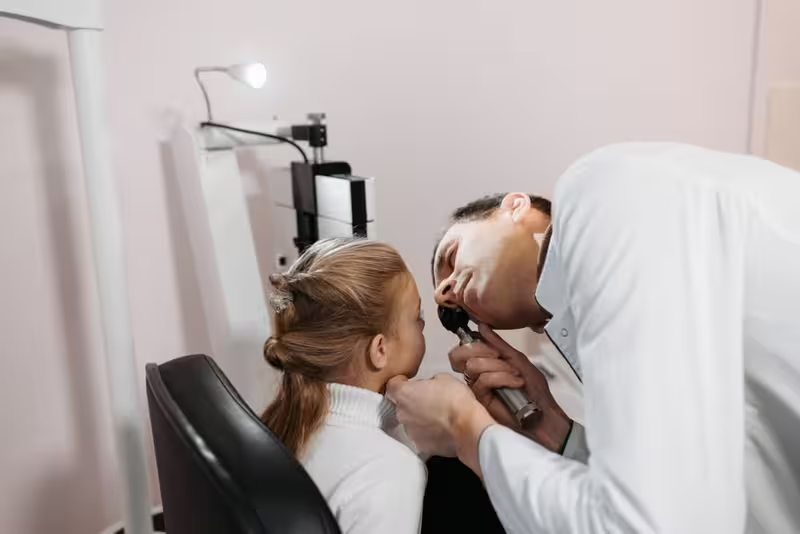
Many people wait until hearing feels clearly muffled before booking an appointment, yet there are several signs that can suggest excess ear wax sooner than that. A blocked or full sensation in one or both ears is common, as are reduced hearing, crackling, or sounds seeming distant. Some people notice ringing in the ears, difficulty understanding speech in noisy places, or a hearing aid that no longer seems to fit or function properly. These symptoms can be linked to wax build-up, although they may also have other causes, which is why a proper assessment is important.
If you are in Reading and are unsure whether your symptoms are caused by wax, a professional ear examination can help to clarify matters. An Audiologist can look into the ear canal, assess the type of blockage, and advise whether microsuction ear wax removal, manual removal, or another clinical route is the best option. It is sensible not to place cotton buds, earbuds, or home tools into the ear, because they often push wax further in and can irritate the canal. A clear assessment first, then treatment, is the safest order.
Symptoms People Commonly Notice
- Ringing, buzzing, or crackling noises that may become more noticeable when the ear is full of wax.
- Difficulty hearing speech clearly, especially in busy places such as cafes or group settings where background noise is present.
- A pressure-like feeling in the ear canal that does not settle on its own and may be more noticeable in quiet moments.
- Hearing sounds as if they are dull, distant, or partly blocked, particularly after showering or wearing earbuds for long periods.
- Hearing aids sounding weaker, whistling more often, or sitting less comfortably because wax has built up around the canal.
Further Reading
For more information and to learn how to book ear wax removal in Reading, click here.
Microsuction or Manual Removal?
Microsuction and manual instrument ear wax removal are both recognised ways to clear wax, although they suit different circumstances. Microsuction uses gentle suction under direct vision, which allows the Audiologist to see the ear canal clearly while removing soft or compacted wax. Manual instrument removal uses specialist tools, such as wax hooks or curettes, and can be helpful when wax is dry, stubborn, or positioned in a way that makes suction less effective. In an experienced Reading clinic, the choice is made after looking into the ear and considering the person’s history, comfort, and symptoms.
Neither method is automatically best in every case. The right approach depends on the ear itself. Some patients prefer microsuction because it avoids water and often feels neat and efficient. Others may benefit from manual removal because the clinician can gently lift the wax away in a controlled manner. A qualified Audiologist will explain the benefits, limitations, and any temporary sensations you might notice. The most important point is that the method should be chosen for the patient, not the other way around.
How the Clinician Chooses
- The patient’s symptoms and history are reviewed, including previous ear infections, surgery, discomfort, or recurring wax.
- The ear canal is examined first, so the clinician can judge wax consistency, position, and how close it sits to sensitive structures.
- If the wax is unsuitable for immediate removal, the clinician may suggest another plan rather than forcing the procedure.
- The Audiologist selects the safest and most suitable method, then explains what will happen before treatment begins.
- Aftercare guidance is provided so the ear stays comfortable and the result lasts as long as possible.
Choosing the Most Suitable Wax Removal Method
Microsuction and manual instrument removal both aim to clear obstructive ear wax with care, but the most appropriate technique depends on the individual ear. An Audiologist can assess the position, texture and amount of wax before deciding how best to proceed, rather than applying the same method to every blockage.
Microsuction may be useful where direct visual control and dry removal are preferred. Manual tools can be considered when wax needs to be carefully lifted or when its location makes suction less suitable. The key benefit of a clinician-led assessment is that the approach is matched to the ear canal and your comfort.
- Describe your symptoms, previous wax problems and any relevant ear history.
- Allow the Audiologist to inspect the ear canal before treatment is selected.
- Ask why a particular technique is recommended and what sensations to expect.
- Follow the aftercare advice given for your individual ears.
- Do not assume that one method will be right for both ears or every future appointment.
- Tell the clinician about discomfort, prior ear surgery, infections or dizziness.
- Accepting a different plan can be the sensible option when immediate removal is not advisable.
What Does Ear Wax Removal in Reading Cost?
Published Payment Methods
- Credit cards
- Debit cards
- Contactless or NFC payments
Payment information may change. Confirm prices, insurance eligibility and accepted methods directly with the provider. Place attributes are provided by Google Maps.
Ear wax removal in Reading starts at £34. The final price can vary depending on whether one or both ears are treated, and whether the appointment is booked at peak or off-peak times. The best way to check the most up-to-date price is to click the Book button below, then choose Find Appointments.
21 Interesting Facts About Reading
- Reading University:woodlands, business, climate science, and wildlife. The university is renowned for research in agriculture, and The University of Reading was founded in 1892 as an extension college of Oxford before gaining its own charter in 1926. Its Whiteknights campus is set in 130 hectares of parkland with lakes, consistently ranking among the top institutions in the UK.
- The Maiwand Lion:In Forbury Gardens stands the Maiwand Lion, it, and a massive cast-iron statue built in 1886 to honour Berkshire Regiment soldiers lost in Afghanistan. It weighs over 16 tons and is one of the largest cast-iron statues in the world. Locals affectionately call it the Forbury Lion has become a symbol of the town.
- The Best Ear Wax Removal In Reading
The very best ear wax removal in Reading is now available at Hearing First Reading at Willow House Surgery, on the corner of Orchard Way and Willow Road, just a stone’s throw from the big Tesco’s. Click here to book ear wax removal in Reading now! - Jane Austen: Jane Austen attended the Reading Ladies’ Boarding School at the Abbey Gateway in 1785 when she was just 10 years old. The school was located in a medieval gateway near Reading Abbey, offering a striking historic backdrop for her early education. Austen remained there for about a year, before the school closed due to financial difficulties. Today, the Abbey Gateway is one of the town’s most iconic historic landmarks, forever tied to Austen’s childhood.
- Reading Prison’s Dark Hauntings:closed in 2013, is said to be haunted by spirits of former inmates. Visitors and staff have described icy cold drafts, doors slamming in empty corridors. Its grim history of executions and Oscar Wilde’s incarceration only deepens the eerie atmosphere that still lingers today., Reading Prison, and unexplained footsteps
- The Ghost Monk of Reading Abbey: Founded in 1121, Reading Abbey is one of the town’s most historic sites, but it is also said to be one of its most haunted. Reports describe a spectral monk gliding silently through the ruins, accompanied by ghostly chanting. Some believe this spirit is linked to the lost remains of King Henry I, once buried here.
- London Street Brasserie: This riverside restaurant has become one of Reading’s most celebrated dining venues. Known for its award-winning modern British menu and focus on seafood, it combines fine dining with views over the River Kennet. It has received multiple accolades and is a favourite for romantic evenings and special occasions.
- Ricky Gervais:Ricky Gervais, actor, creator of, and the comedianThe Office,a working-class district of the town, was born and raised in Reading in 1961. He grew up in Whitley, and often draws on his upbringing in his comedy. Gervais studied at Reading’s Ashmead Comprehensive School before going on to university. Despite his global fame, he frequently references Reading in interviews, keeping his hometown firmly part of his story.
- The Lyndhurst:hearty yet creative pub food in a warm and quirky interior. It’s a place where visitors, A cosy gastropub tucked just off Queen’s Road, The Lyndhurst is loved by locals. It offers real ales, and craft beers can experience Reading’s relaxed pub culture at its best.
- CUP Specialty Coffee & Tea:welcoming atmosphere. Its bright interiors and diverse menu make it a vibrant part of Reading’s café scene. It’s a popular spot for both locals and visitors looking for something a little different from chain coffee shops., Middle Eastern-inspired brunches, Located near St Mary’s Butts, and CUP is known for its artisan coffee
- Workhouse Coffee: This independent café on King Street is a haven for serious coffee enthusiasts. Known for roasting its own beans and serving some of the best espresso and filter coffee in Berkshire, it has a loyal following. With minimalist design and a focus on quality, it has helped shape Reading’s modern coffee culture.
- Reading Abbey Ruins: The atmospheric ruins of Reading Abbey are among the town’s greatest treasures. Once one of the most important religious sites in medieval England, it was destroyed under Henry VIII’s Dissolution of the Monasteries. Recent conservation has reopened large parts of the site, making it a must-see for visitors.
- Forbury Gardens:providing a tranquil escape from the bustling town centre. It features formal flowerbeds, the iconic Maiwand Lion. Families and visitors enjoy its peaceful paths and historic charm throughout the year., This Victorian park is located in the heart of Reading, and a bandstand
- The Museum of English Rural Life (MERL):MERL contains the largest collection of objects, Run by the University of Reading, books, and archives on English farming and countryside life. Its exhibitions are interactive and quirky, making it surprisingly fun as well as educational. The museum connects the town to the country’s rural traditions in a unique way.
- The River Thames & Caversham:a stroll across Caversham Bridge reveals leafy parks and traditional riverside pubs. In summer and Reading sits on the River Thames, boat trips and festivals bring the riverside to life. It’s an essential part of Reading’s charm and a reminder of its strong links to river trade and leisure.
- The Oracle Shopping Centre: Spanning the River Kennet, The Oracle is Reading’s main retail and leisure hub. It combines major shopping brands with restaurants and bars along its riverside promenade. With its mix of shopping and dining, it is a focal point for visitors and locals alike.
- King Henry I’s Burial Site:his remains were lost, King Henry I founded Reading Abbey in 1121 and was buried there in 1136. After the abbey’s destruction, and their location has never been confirmed. Archaeologists continue to speculate about the true resting place of the Norman king.
- Kate Winslet: Kate Winslet, the Academy Award–winning actress, was born in Reading in 1975. She grew up in the town, attending local schools and performing in youth theatre groups before moving on to Redroofs Theatre School. Winslet has often spoken fondly of her Reading roots and the strong sense of family and community there. Even with Hollywood fame, she remains closely identified with her hometown beginnings.
- The Kennet and Avon Canal: Running through Reading, the Kennet and Avon Canal once provided a vital transport link between London and the West Country. It transformed the town into a key hub for trade during the Industrial Revolution. Today, its towpaths offer scenic walks and glimpses of Reading’s industrial past.
- Reading Festival Origins:The Rolling Stones, hosting legendary acts such as Nirvana, Radiohead. Its long history makes it an essential part of Reading’s modern cultural identity., Reading Festival is now one of the biggest music festivals in Europe, and but it started in 1961 as the National Jazz Festival. Over the years it expanded to rock and pop
- Royal Berkshire Hospital:Opened in 1839, stroke care, maternity services, is a striking example of Greek Revival architecture and remains a listed building. Today, the Royal Berkshire Hospital is one of the oldest NHS hospitals still in operation. Its original frontage, built in Bath stone, and it is a major regional hospital specialising in cancer treatment, continuing its legacy of serving the community for nearly two centuries.
- Reading Town Hall:making it a cultural hub as well as a civic landmark. Visitors come for exhibitions, the celebrated Bayeux Tapestry replica, Reading Town Hall is a striking Victorian complex noted for its red brick and terracotta Gothic Revival styling. It houses Reading Museum and a renowned concert hall with excellent acoustics, and year-round performances in the historic auditorium.
- Reading Gaol: Built in the 1840s to a radial design associated with Victorian prison reform, Reading Gaol is architecturally imposing and historically significant. Oscar Wilde’s imprisonment here inspired The Ballad of Reading Gaol, giving the site international literary resonance. Since closing in 2013, it has hosted acclaimed arts projects and remains at the heart of ongoing debates about preservation and future use.
What to Expect Before, During, and After Treatment
Research Catalogue Results for Ear Wax Removal
- The auricular cough reflex: lateralization, prevalence, procedural determinants, and the role of examiner handedness. - van de Loo J, Mayer M, Sharaf K, Eckel H, Jansen L, Klussmann JP, Luers JC., 2026.
- High-definition otoscopic device for humanitarian mission: how i do it. - Lechien JR, Maniaci A, Kipsang MJ, Kibor M, Vaira LA., 2025.
- Use of Castor Oil in Dermatology: A Narrative Review. - Girdler K, Cabatu A, Olds H, Potts GA., 2026.
Source: Europe PMC. These are bibliographic matches, not personalised medical advice or an endorsement of a treatment.
A good ear wax removal appointment should feel organised and easy to follow. Before treatment, you may be asked about your symptoms, previous ear care, any pain, discharge, dizziness, or sudden changes in hearing. This helps the Audiologist decide whether routine wax removal is appropriate. During the procedure, you will usually sit comfortably while the clinician looks into the ear and removes the wax using the chosen method. The process is generally direct and closely monitored, which is why many people find it reassuring.
After treatment, hearing often seems clearer quite quickly, although some ears may feel slightly sensitive for a short time. The Audiologist should give clear aftercare guidance, which may include keeping the ear dry for a short period if advised, avoiding cotton buds, and watching for unusual symptoms. If your ears tend to build wax repeatedly, you can also discuss practical prevention, such as hearing aid hygiene, safe ear cleaning habits, and when to return for another assessment. A well-run clinic should leave you informed, not confused, and more confident about caring for your ear health.
Helpful Aftercare Points
Do not put cotton buds, hair grips, or any other objects into the ear canal. This can push wax deeper, scratch the skin, and make future blockage more likely.
When to Ask for More Advice
If you have ongoing pain, persistent discharge, sudden hearing loss, or dizziness after an appointment, seek clinical advice promptly. Those symptoms are not typical of simple wax build-up and should be assessed properly.
A Simple Tip for Repeat Wax
People who regularly wear hearing aids, earbuds, or ear defenders may be more prone to wax accumulation. A planned review can be more useful than waiting until hearing becomes noticeably blocked again.
Practical Note
Keeping a note of when wax builds up and which ear is affected can help the Audiologist spot a pattern and suggest the most sensible follow-up interval.
Preparing for Treatment and Looking After Your Ears
A well-structured ear wax removal appointment starts with information that helps the Audiologist judge whether treatment is suitable. Be ready to mention ear pain, discharge, dizziness, sudden hearing changes and previous ear care, as these details can affect whether routine microsuction or manual removal should go ahead.
During treatment, the clinician can check the ear under direct vision and use the chosen removal method in a controlled way. Afterwards, clearer hearing may be noticed quickly, while mild temporary sensitivity can occur for some people. Ask for personalised aftercare guidance before you leave, particularly if you wear hearing aids, earbuds or ear defenders regularly.
Keep objects out of the ear canal. Cotton buds and improvised tools can compact wax, irritate delicate skin and make a simple blockage harder to manage.
- Seek prompt clinical advice for persistent pain, discharge, dizziness or sudden hearing loss.
- Make a note of recurring blockage, including which ear is affected and when symptoms begin.
- Discuss a planned review if wax build-up repeatedly interferes with hearing aids or everyday hearing.
Expert Ear Care in a Safe, Comfortable Setting
Your ears and hearing are delicate, so they should be cared for by someone with specialist knowledge. Some providers delegate ear wax removal to lay people and treat it as a routine task, but we believe it calls for the skill and judgement of a trained Audiologist.
That means your ears are looked after by a specialist with an in-depth understanding of ear anatomy and physiology, which helps minimise the risk of injury and supports a safe, effective procedure tailored to your needs. Your hearing is too important to leave to chance, and at our clinic only qualified Audiologists perform ear wax removal as part of our commitment to a high standard of care.
Hearing First Reading – Microsuction Ear Wax Removal Reading Tn34 Map
Audiologist-Led Ear Wax Care in Reading
When ears feel blocked or hearing seems dulled, it makes sense to choose a service led by a trained Audiologist. Hearing First explains that ear wax removal at its Reading clinic is carried out only by qualified Audiologists, combining practical removal skills with a detailed understanding of ear anatomy and physiology. This specialist-led approach is intended to support careful, individualised ear care rather than treating every blocked ear in the same way.
- Discuss your ear symptoms and any relevant concerns before treatment.
- Let the Audiologist assess the most suitable wax removal approach for your ears.
- Ask questions if you are unsure what to expect from microsuction or manual instrument ear wax removal.
Microsuction ear wax removal can be a reassuring option for people seeking professional help for excess wax, particularly where comfort and precision matter. The practitioner can tailor the procedure to your needs and explain the process clearly. If you have persistent pain, discharge, sudden hearing changes or another worrying symptom, seek appropriate clinical advice before booking routine wax removal. Book an appointment in Reading so an Audiologist can consider your concerns carefully.
Ear Care for Families and Younger Patients
Some younger patients need professional ear wax removal because wax can affect hearing, concentration at school, or the comfort of hearing aids. In a safe clinic environment, the approach should be calm, age-appropriate, and explained clearly to both the young person and their parent or guardian. The main aim is to reduce anxiety and build trust before any treatment begins. For under 18s, an Audiologist can assess whether microsuction is suitable and explain what will happen in plain language, so everyone involved understands the plan.
This type of appointment is not only about removing a blockage. It is also about checking that the ear canal is healthy, the child or teenager is comfortable, and any concerns about pain, infection, or recurring wax are properly addressed. Parents often appreciate having a specialist confirm whether wax is the cause of reduced hearing, rather than guessing at home. If the ear looks inflamed or the symptoms suggest something other than wax, the Audiologist should say so and recommend the right next step. That careful, honest approach is especially important for younger patients.
What Parents and Guardians Should Know
- A parent or guardian should be present for under 18 appointments, so consent and reassurance are managed properly throughout the visit.
- The Audiologist should explain the process in simple terms, because clear language reduces fear and helps the young person stay relaxed.
- If the child has pain, discharge, or repeated infections, the appointment may need a different clinical route rather than routine wax removal.
- Microsuction is often preferred for precision, but the clinician will decide what is safest after examining the ear canal.
- Good aftercare advice matters, especially if the young person uses earbuds, hearing devices, or takes part in swimming and sports.